Farmers’ Workshop in Quqao, Botswana
When we think of Botswana, images of elephants, lions, and untouched wilderness often come to mind. What’s easily forgotten is that thousands of people live in the midst of these landscapes and share their habitat with wild animals every day.
One of the areas where the SAVE Wildlife Conservation Fund has been working for many years is located around Quqao in concessions NG32 and NG35, west of the Okavango Delta. These remote communities are several hours’ drive from Maun, the nearest major town with basic services. Farming and livestock raising are the main sources of livelihood for many families here—and it is precisely here that daily challenges arise for the coexistence of humans and wildlife.
Elephants regularly cross fields in search of food and can destroy large portions of a crop in a short amount of time. At the same time, lions, hyenas, and other predators pose a threat to livestock. For the families affected, this means far more than the loss of individual plants or animals. Crops often provide for a family for several months, while cattle in Botswana are not only a source of income but also a form of wealth, a means of retirement security, and an important component of social standing.
To address these challenges in the long term, SAVE takes a holistic approach. In addition to strengthening predator-proof kraals, promoting climate-smart agriculture, and developing sustainable income-generating opportunities, ongoing training for the communities plays a central role.
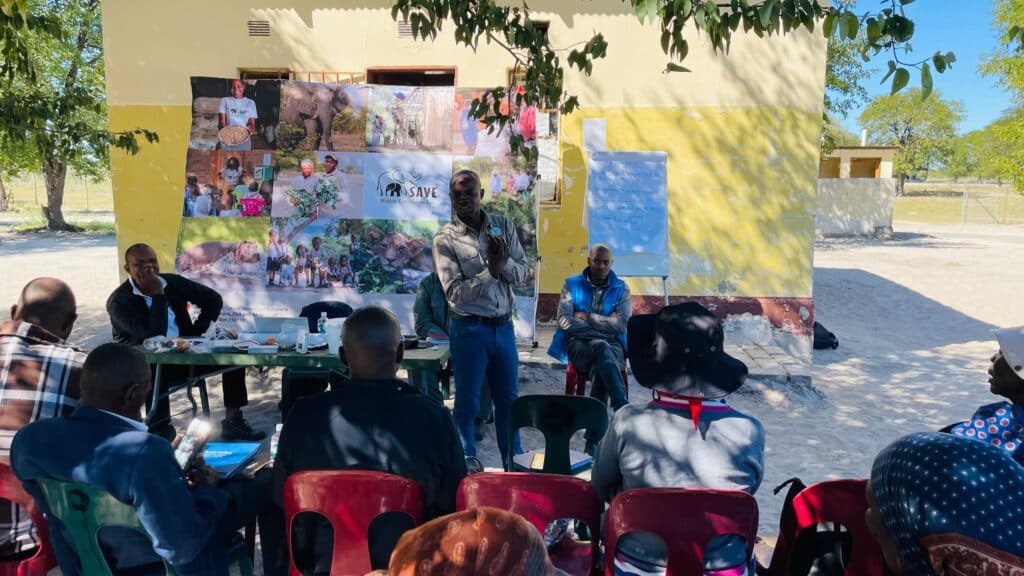
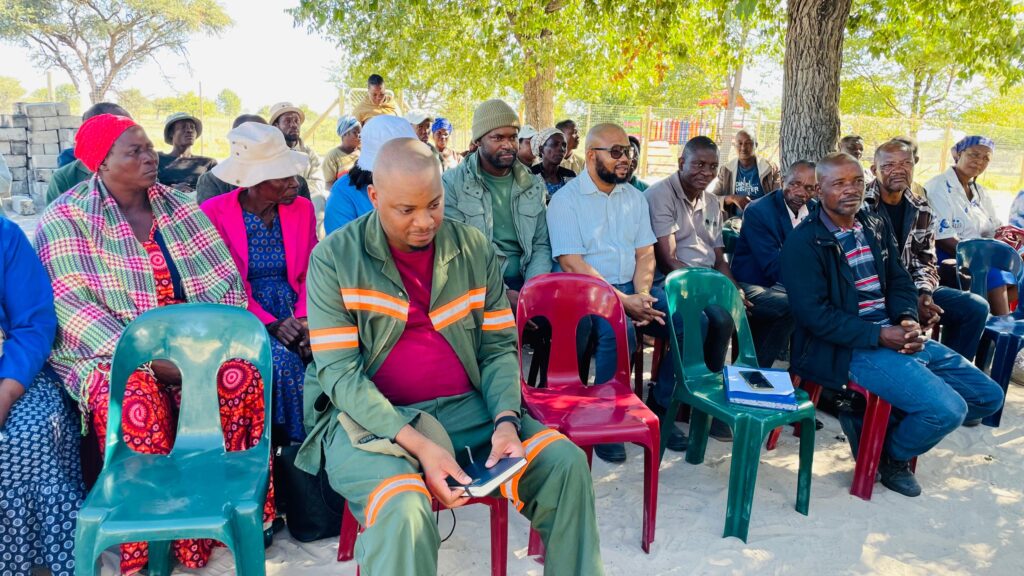
For this reason, the SAVE Wildlife Conservation Fund, in collaboration with the Ministry of Lands and Agriculture, organized a three-day farmer workshop in Quqao from June 9 to 11, 2026. A total of 148 participants were recorded over the three days of the event. The goal of the workshop was to help farmers improve their yields, enhance animal health and disease prevention, and put sustainable agricultural methods into practice.
During the workshop, topics such as seed selection, plant protection, post-harvest management, animal health, animal identification, and government support programs were covered. In addition, a rabies vaccination campaign was held, during which 36 dogs and 7 cats were vaccinated, thereby making an important contribution to both public health and species conservation.
The workshop is part of a long-term program through which SAVE supports communities in Botswana’s wildlife contact zones in sustainably reducing human-wildlife conflicts. This is because coexistence is not achieved through individual measures, but rather through the combination of various approaches: better-protected livestock enclosures, more resilient agriculture, expert advice, and close collaboration with communities and government partners.
At SAVE, we are convinced that successful wildlife conservation begins when people are given the opportunity to secure their own livelihoods. Only when communities benefit from the natural resources in their surroundings and conflicts with wildlife are reduced can humans and animals coexist peacefully in the long term.
For us, species conservation means more than just protecting wildlife. It also means empowering the people who share their living space with these wild animals every day.