Wolf Research Across Borders: SAVE in Minneapolis
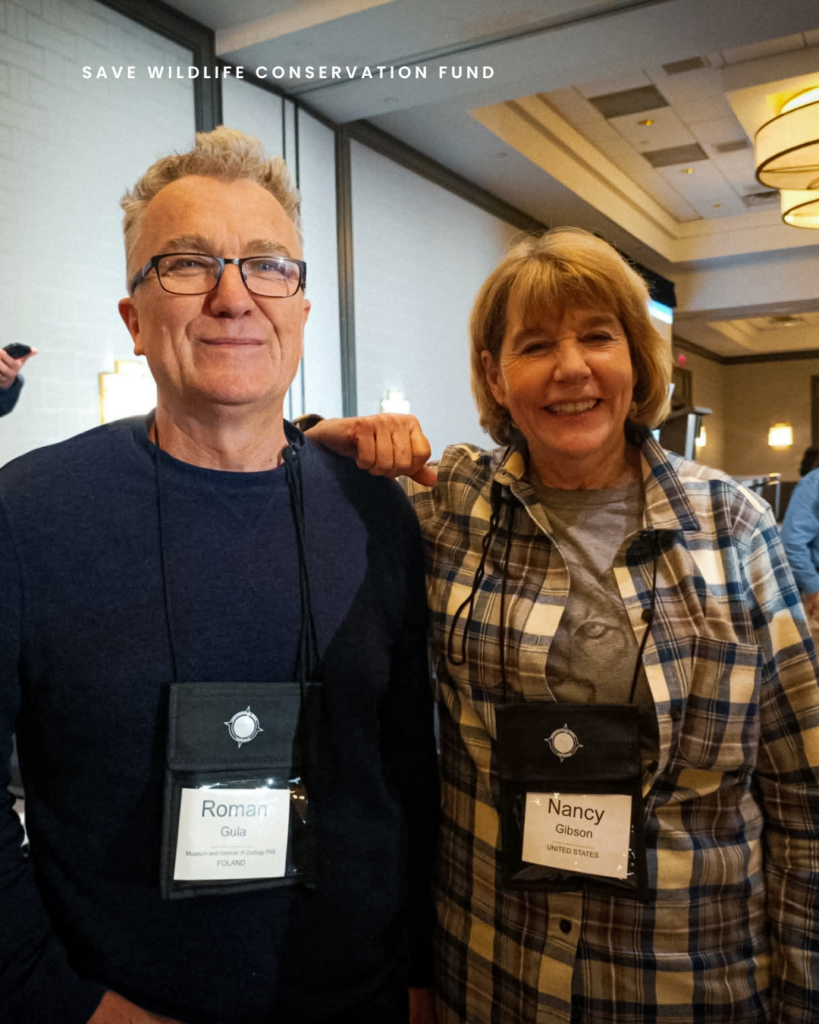
How do wolves live in landscapes that have been profoundly altered by humans? And how reliable are the methods we use to study them? These were the questions Prof. Roman Gula and Joanna Toczydłowska from SAVE Poland brought to the International Wolf Symposium 2026 in Minneapolis.
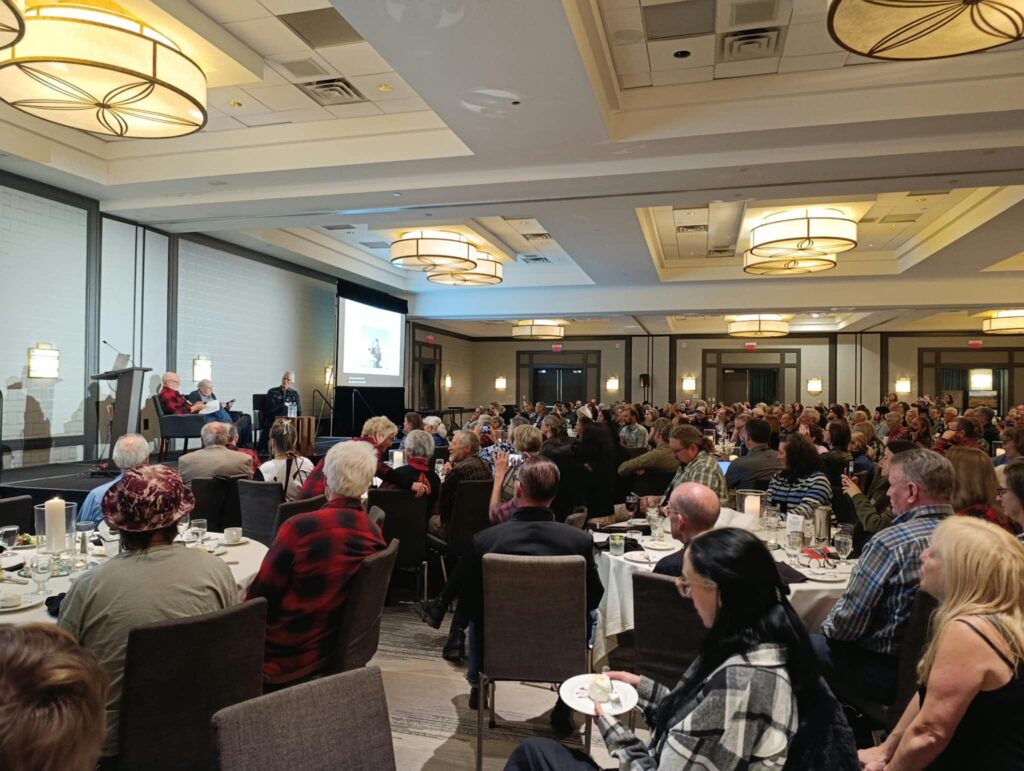
From 22 to 25 October, more than 400 participants from over 15 countries gathered under the theme “Wolves in a Changing World”. More than 100 presentations explored wolf behaviour, their role in ecosystems, coexistence with humans and modern monitoring methods.
The Return of Wolves to Central Poland
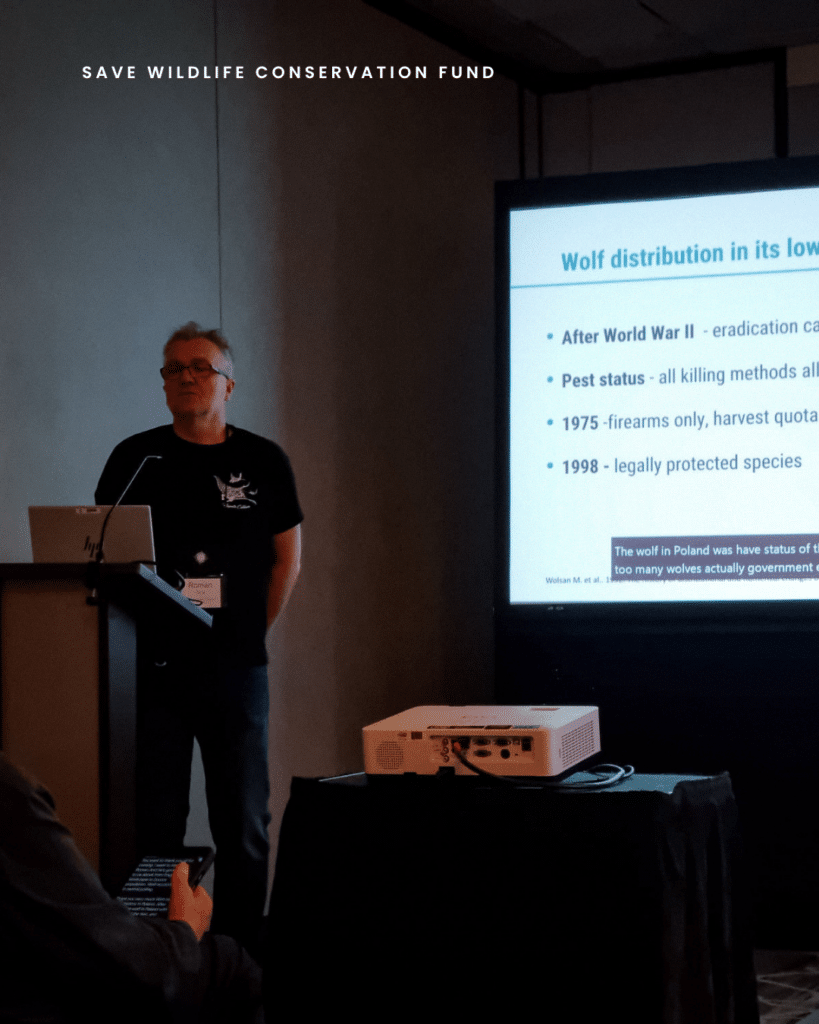
Prof. Roman Gula, head of our wolf monitoring project, presented findings from years of research into the recolonisation of central Poland. His presentation explored how wolves live in a densely populated landscape fragmented by human activity and what opportunities exist for coexistence.
This research helps us better understand the animals’ needs: Which areas do they use? How do they cope with altered habitats? And what conditions enable them to live there in the long term?
Camera Traps and AI: How Reliable Are the Results?
Project coordinator Joanna Toczydłowska examined the reliability of camera traps, artificial intelligence and statistical models in wolf monitoring.
These tools offer opportunities to detect wolves and analyse footage. Yet collecting data alone is not enough to draw scientifically sound conclusions. The methods themselves must also be critically assessed: How robust are their results, and what are their limitations? These questions were central to her presentation.
Sharing Knowledge and Advancing Wolf Conservation
The symposium gave our team the opportunity to share experiences from Poland and exchange knowledge with researchers from around the world. Participants also included veteran wolf researchers David Mech, Rolf Peterson, Steve Fritts and Douglas Smith.
At SAVE, studying how wolves live goes hand in hand with carefully evaluating the methods we use. International exchange helps us improve our work and incorporate new findings.
Effective wolf conservation requires a sound understanding of how wolves live and what both the animals and their habitats need.